

03 Sep The Last Two Inches of a Room Are the Ones That Take a Decade to Master
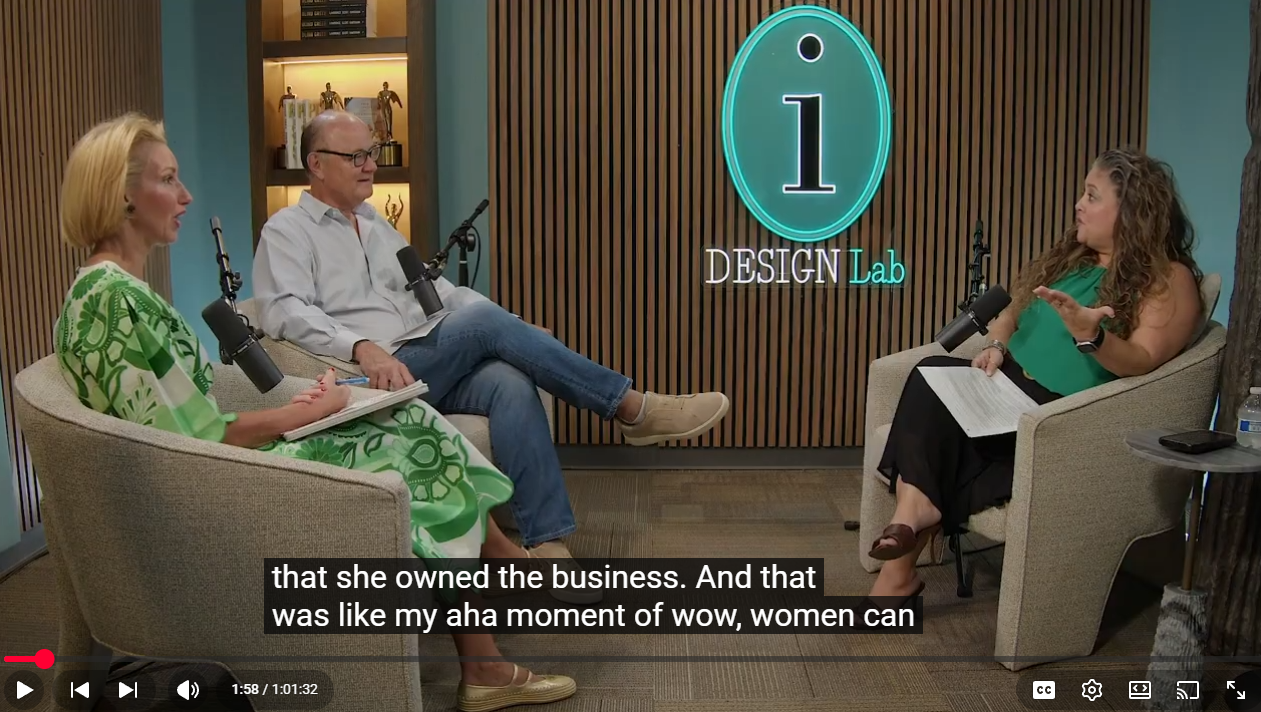
Leslie Excel joins iDesign Lab to make the case that drapery isn’t the finishing touch — it’s the architecture you forgot was architecture.
A finished room has a way of making its own hardest decisions look inevitable. The drapes fall exactly where they should. The light lands exactly how it should. Nothing about it announces the math that made it possible. That invisibility is the entire point — and it is precisely what Leslie Excel of Excel and Design Group has spent her career engineering into being. On iDesign Lab, she pulls back the curtain, literally, on what a drapery workroom actually does, and why the last layer applied to a room is so often the one that decides whether it merely looks decorated or actually feels lived-in.
For interior designers, her message lands like a correction to a long-standing blind spot: window treatments, hardware, lining, and installation planning aren’t accessories tacked on at the end. They’re core architectural decisions — governing light, acoustics, privacy, proportion — masquerading as soft goods.
A Career Built Next Door
Leslie’s path has the clean inevitability of a story told in hindsight, which is exactly what makes it worth hearing in full. It begins, almost too neatly, next door to a drapery workroom. She’s pulled into the trade before she’s chosen it, switches her college major to interior design once she realizes what’s actually happening on the other side of that wall, and eventually builds a business on a deliberately narrow premise: trade-only, designer-first.
That model is the quiet thesis of her whole career. Serving designers exclusively reframes the relationship as partnership rather than transaction — and partnership is earned, not billed. She builds loyalty by reading a designer’s aesthetic quickly, offering sharp suggestions early, and protecting their time with confident, decisive calls instead of endless options. Networking and relentless follow-through turn a first referral into a decade-long relationship, and those relationships, compounded, are what scale a workroom into a full fabrication studio.

Where the Fabric Meets the Physics
Ask anyone who has never priced out custom drapery and they’ll assume the hard part is aesthetic. Ask Leslie, and she’ll tell you the hard part is physics wearing a very convincing disguise.
Blackout lining changes the entire face of a sheer. Interlining adds body a fabric didn’t have on its own. Railroading double-width fabric sidesteps a vertical seam no client wants to see across a wall of glass. In the soaring ceilings of South Florida’s design markets — Boca Raton, Miami, Naples, Palm Beach — ceiling height, window width, and stack-back space collide to force decisions no one wants to make after the fabric’s already cut: live with a horizontal seam, introduce banding, or go back to the textile selection entirely. It’s why the unglamorous conversations — fabric content, repeat, pattern matching, how a stripe will actually read once it’s hanging — have to happen at the very start. Skip them, and you’re not looking at a design problem later. You’re looking at a change order.
The Solution Mindset
The stories that stay with you, though, aren’t about lining specs — they’re about the moments design collides head-on with reality and someone has to solve it in real time. Leslie describes building a tented effect out of gathered fabric to disguise an unglamorous soffit, and cutting drapery around a ballroom exit sign while keeping it fully code-compliant behind a clear liner insert. Small miracles, essentially, performed under deadline.
None of it happens in isolation. The best results, she’s clear, come from a full team pulling in the same direction — interior designer, fabrication studio, installer, builder, architect, AV integrator — all coordinating on motorized shades, tracks, recessed pockets, and power planning long before installation day. Hardware, in this world, is never purely aesthetic. A track with the right fascia, batons, cords, and ring count operates like it isn’t there at all; a telescoping rod or a poorly planned bracket creates exactly the kind of “it’s your fault” moment every designer has learned to dread.
Process as the Real Craft
The final thread running through the conversation is the one about longevity — both of a business and of a person running it. Documented workflows, project management systems, and real training protect quality as a team scales, which matters enormously in a trade where genuine sewing expertise is quietly becoming rarer by the year.
Leslie ties that discipline directly to her own. Meditation, journaling, a Miracle Morning routine — not wellness as garnish, but as the infrastructure that keeps her oriented toward service instead of spiraling on whatever’s currently on fire. Whether you’re a designer sourcing custom drapery, a homeowner mid-renovation, or a creative building something of your own, her message holds steady in every direction: plan early, trust the people who’ve spent a decade earning their expertise, and treat the finishing touch like it was part of the foundation all along.